
In a landmark study, Indian scientists have unearthed compelling evidence that the Kashmir Valley, now characterized by its cool, Mediterranean-type climate, was once a warm and humid subtropical landscape teeming with lush forests. This dramatic climatic transformation, spanning millions of years, has been traced through fossilized leaves and the relentless forces of Himalayan mountain-building.
The discovery is anchored in the historic fossil leaf collection curated by the late Prof. Birbal Sahni and Dr. G.S. Puri, preserved at the Birbal Sahni Institute of Palaeosciences (BSIP), Lucknow—an autonomous institute under the Department of Science and Technology (DST). The fossils, recovered from the Karewa sediments of the Kashmir Valley, offer remarkable preservation and taxonomic diversity, with several leaf specimens bearing resemblance to subtropical plant species that are now extinct in the region’s current temperate climate.
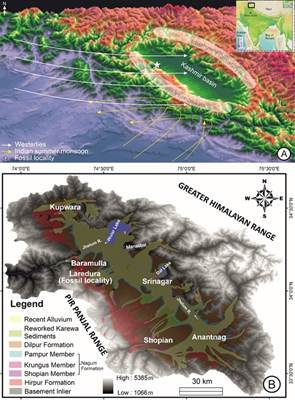
Investigating the Past to Understand the Present
The research team, comprising Dr. Harshita Bhatia, Dr. Reyaz Ahmad Dar, and Dr. Gaurav Srivastava of BSIP, was intrigued by the stark contrast between fossil evidence and the valley’s present-day vegetation. This curiosity led to a detailed palaeobotanical and tectonic investigation using advanced scientific techniques.
Their findings link this environmental transformation to the tectonic uplift of the Pir Panjal Range, a key sub-Himalayan mountain system. As these mountains gradually rose, they obstructed the Indian summer monsoon from penetrating the valley. The result was a gradual reduction in rainfall, drying out once-lush forests and shifting the climate from subtropical warmth to a more arid, Mediterranean profile.
Science Behind the Shift
To decode ancient climate conditions, the researchers employed CLAMP (Climate Leaf Analysis Multivariate Program)—a sophisticated technique that analyzes leaf shape, size, and margin features to infer past temperature and rainfall patterns. They complemented this with the coexistence approach, which cross-references fossil species with their modern relatives to estimate possible climate ranges.
The integration of these methodologies allowed the team to construct a high-resolution snapshot of the Kashmir Valley as it existed approximately four million years ago—a time when it was warm, humid, and biologically diverse before being gradually transformed by tectonic activity.
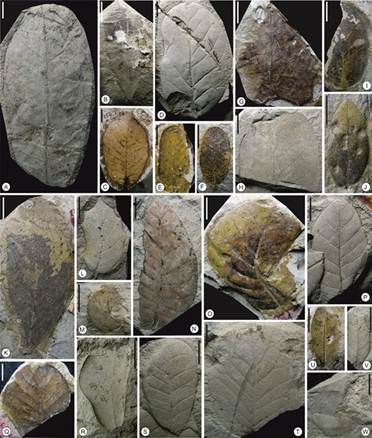
A Window into Earth’s Climate Dynamics
Published in the peer-reviewed journal Palaeogeography, Palaeoclimatology, Palaeoecology, the study is more than a reconstruction of prehistoric ecology. It offers valuable insights into the dynamic interplay between geology and climate, demonstrating how large-scale earth processes like mountain building can dramatically reshape regional weather systems.
Dr. Gaurav Srivastava emphasized the broader relevance of the study:
“Understanding how past tectonic events impacted ecosystems helps us build more accurate models for predicting future climate outcomes. The Himalayas, being one of the youngest and most tectonically active mountain ranges in the world, offer a natural laboratory for such research.”
Relevance in the Age of Climate Change
As global climate patterns shift in response to anthropogenic influences, studies like this serve as essential guides for conservation and adaptation strategies. The Himalayas are among the world’s most fragile ecological zones, and understanding their evolutionary past is key to managing their environmental future.
By revealing how natural processes once dried up a subtropical paradise, the research also serves as a warning: climate change—whether driven by tectonics or human activity—has the power to permanently alter ecosystems.